Toyota Chaser JZX90 common problems before importing Japan — 189 Owner Logs, non-VVT Edition
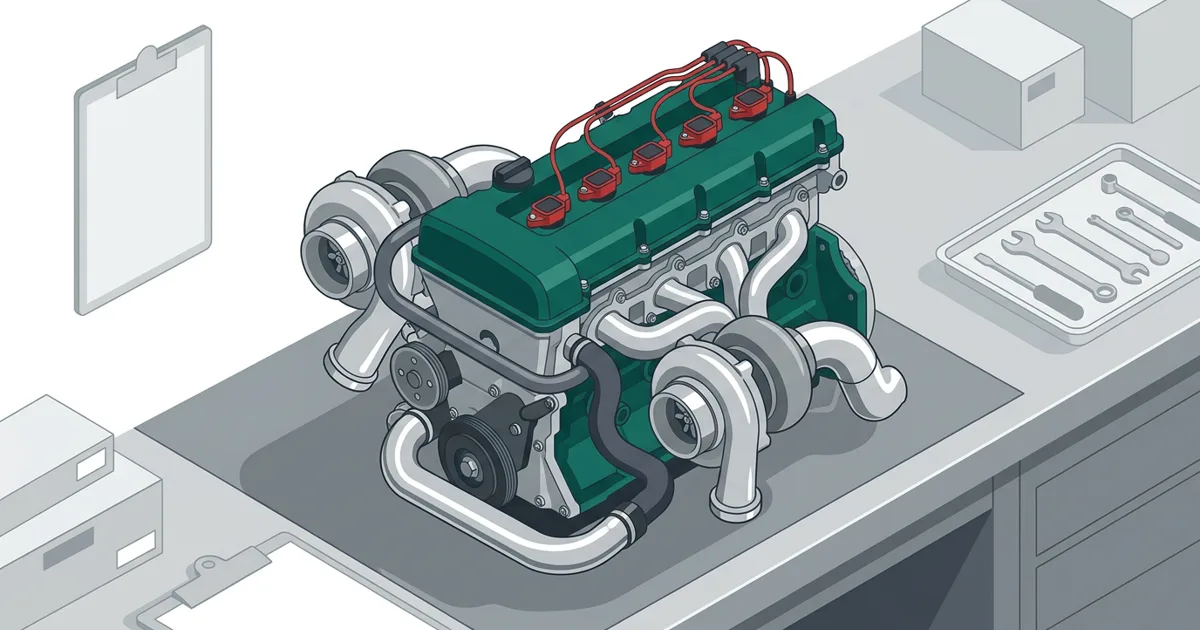
189 maintenance logs posted by Japanese X90 owners, classified and counted — the common problems to check before importing a Toyota Chaser JZX90 from Japan.
The JZX90 Toyota Chaser is a twin-turbocharged RWD sedan built October 1992 – September 1996, fitted with the non-VVT-i 1JZ-GTE (280 PS, twin CT12A turbos) in the Tourer V grade — a different engine generation from the 1JZ-GTE VVT-i used in the JZX100.
English guides treat the JZX90’s 1JZ-GTE as a variant of the engine in the JZX100. It shares the name and the displacement. It does not share the turbo configuration, the blowby system, or the turbine wheel material — and those differences produce three fault modes the JZX100 does not have.
Japanese owner logs tell that story. English guides do not.
Fourth in a series applying how we aggregate Japanese owner maintenance logs across chassis, after the JB23 Jimny, Silvia S15, and Toyota Chaser JZX100 common problems.
この記事の要点
- Electrical is the largest cluster — ECU capacitor degradation affects the main ECU, ABS/TRC computer, and instruments. English guides mention none of it
- The non-VVT 1JZ-GTE has a documented blowby recall in Japan that does not apply to exported cars — buyers importing from Japan need to verify whether the valve has been replaced
- Ceramic turbine wheels on early non-VVT engines are a delamination risk — a fault absent from the later VVT-i engine in the JZX100
- Confirm the grade before you inspect anything — Tourer V (1JZ-GTE twin-turbo) and Tourer S (1JZ-GE naturally aspirated) are visually almost identical
The headline: what owner logs say vs what English guides say
Japanese owner logs confirm some of what English guides say — and add several categories those guides never mention.
| What English guides say | What the Japanese logs show |
|---|---|
| 1JZ-GTE is reliable even when modified | Confirmed. No bottom-end or head gasket failures in engine-bay posts |
| Expect some rust on a 30-year-old car | Confirmed — sill seams and rear arches are the documented areas |
| Parts availability becomes an issue | Confirmed — overhaul kits discontinued, owners improvising |
| (not mentioned) | ECU capacitor failure — main ECU, ABS/TRC computer, instruments |
| (not mentioned) | Blowby valve recall exists in Japan; exported cars are not covered |
| (not mentioned) | Ceramic turbine wheels on early non-VVT units — delamination risk |
| (not mentioned) | ISCV cleaning — same finding as JZX100, JB23, and Silvia S15 |
| (not mentioned) | Crankshaft pulley detachment — harmonic balancer rubber failure |
This analysis sampled 189 post titles across 21 Minkara pages in five categories (running gear, exterior, engine bay, electrical, inspection), collected 2026-09-28. The full method and limits are at the end.
Tourer V and Tourer S look identical — the engine code is the only reliable tell
Confirm the grade from the engine code, not from the exterior. The Tourer V and Tourer S share bodywork, trim, and dashboard. Buying a Tourer S while paying for a Tourer V is a documented risk with this chassis.
| Grade | Engine | Output | Turbo | 5-speed MT |
|---|---|---|---|---|
| Tourer V | 1JZ-GTE (non-VVT-i) | 280 PS at 6,200 rpm | Twin CT12A | R154 available |
| Tourer S | 1JZ-GE (naturally aspirated) | — | None | — |
| Avante G | 2JZ-GE (3.0 L naturally aspirated) | — | None | — |
The JZX90 Tourer V produces 280 PS and 363 N·m at 4,800 rpm from a 2,492 cc inline-six with a compression ratio of 8.5:1. The twin CT12A configuration is parallel, not sequential — a layout the JZX100 Tourer V does not use (the JZX100 uses a single CT15B).
How to confirm the grade before purchase:
- Ask for a photograph of the engine bay. A twin-turbo setup is visible. A single plenum intake without turbos is the 1JZ-GE
- Check the vehicle registration certificate (車検証) — the engine model field must read 1JZ-GTE for the Tourer V
- The model code on the chassis plate must begin JZX90 for a 1JZ-GTE car; GX90 or SX90 indicate different engines
The JZX90 was produced from October 1992 to September 1996. Because the VVT-i update arrived after the JZX90’s production run ended, every genuine JZX90 Tourer V carries the non-VVT-i 1JZ-GTE. There is no VVT-i variant within the X90 range.
The 1JZ-GTE non-VVT has three failure modes the JZX100 does not
The non-VVT 1JZ-GTE has documented problems that are specific to its generation — they do not apply to the 1JZ-GTE VVT-i in the JZX100. Treating them as the same engine for inspection purposes will cause you to miss the three issues below.
| Fault | JZX90 non-VVT | JZX100 VVT-i | Notes |
|---|---|---|---|
| Blowby valve defect (one-way valve on intake cam cover) | Present — Japan recall issued | Not present | Exported cars not covered by recall |
| Turbine wheel material | Ceramic (delamination risk at high RPM) | Metal | Early non-VVT units only; later revised |
| Turbo oil seal wear from blowby | Present — oil vapor enters turbos via blowby path | Not present | Secondary consequence of blowby defect |
| VVT cam sprocket wear | Not applicable (no VVT-i) | Present | JZX100-specific |
| Twin CT12A parallel configuration | Present | Not present (single CT15B) | Different turbo inspection checklist |
The blowby recall. A recall was issued in Japan to repair a faulty one-way valve on the head of the first-generation 1JZ-GTE, specifically on the intake cam cover. This valve defect allows blowby gas to enter the intake manifold, and oil vapor flowing into the turbos causes premature wear on the seals. The recall applies to Japanese domestic market cars only — it does not apply to 1JZ-GTEs exported to other countries. If you are buying a JZX90 that was originally sold in Japan and exported, ask the seller whether this valve was replaced. Japanese owner logs document blowby catch tank hose replacement and ventilation valve replacement as maintenance items on this chassis.
Ceramic turbine wheels. Early non-VVT 1JZ-GTE units used ceramic turbine wheels, which are prone to delamination. Fragments from a failed ceramic wheel enter the engine. Later production revised the material. Ask about the turbo history of any early-production JZX90 (1992–1993) and verify the turbos have not been rebuilt with worn or cracked wheels.
ISCV, for the fourth chassis running. One Minkara engine-bay post documents ISCV cleaning on the JZX90. The JB23 Jimny analysis found ISCV cleaning flagged as a critical item; the Silvia S15 analysis found AAC valve cleaning logged as scheduled preventive work; the JZX100 common problems analysis found the same on the VVT-i engine. Four chassis, three manufacturers, same idle-control component under three names — and no English guide mentions it. A rough, hunting, or dropping idle on the JZX90 is a legitimate signal to clean this valve before assuming a larger fault.
Crankshaft pulley. One owner log records a crankshaft pulley detachment — harmonic balancer rubber failure separating the outer ring. On a 30-year-old engine, inspect the pulley for cracking or movement in the rubber layer. This is a mechanical failure, not unique to the JZX90, but the age of these cars makes it relevant.
Cooling system. Owner logs document radiator replacement and heater valve replacement as maintenance events on the JZX90. A twin-turbo engine running hot coolant into a 30-year-old radiator is a combination worth budgeting for. If the coolant history is unknown, inspect the radiator visually for discolouration and pressure-test it before purchase.
Electrical failures are the largest cluster — ECU capacitors first
Electrical and electronic faults form the largest single category in this sample — and the specific failure path centres on electrolytic capacitor degradation across multiple ECUs. This is not a fault that shows up in any English guide for this chassis.
| System | Documented fault | Posts in sample |
|---|---|---|
| Main ECU | Full capacitor replacement (solid-state conversion) | 1 |
| ABS / TRC computer | Capacitor replacement (two separate jobs documented) | 2 |
| Tachometer | Repair (capacitor failure) | 1 |
| Engine start | Engine cranks but will not start | 1 |
| Alternator | Replacement | 2 |
| Cam angle sensor | Failure (aftermarket unit) | 1 |
| Instrument cluster | Contact failure / erratic display | 1 |
| Power window (driver) | Inoperative | 1 |
| Window regulator | Replacement | 1 |
The ECU capacitor chain. Japanese owners have documented replacement of electrolytic capacitors in the main ECU, the ABS/TRC computer, and instruments. One owner converted the main ECU to solid-state capacitors. Two separate owners documented ABS/TRC computer capacitor replacement. One owner’s tachometer repair traced back to a capacitor fault. A JZX90 built in 1992 is now 34 years old — every electrolytic capacitor in every ECU on this car is at or past the end of its design life.
What to check on inspection:
- At ignition-on (before cranking), confirm every warning light illuminates and then clears — ABS and TRC especially. A removed bulb concealing a fault is a known practice
- Operate every power window from every switch, not just the driver’s window from the driver’s door
- Confirm the tachometer reads cleanly during warm-up
- Ask whether the main ECU, ABS/TRC unit, or any other ECU has been recapped or replaced
Cam angle sensor. One owner log documents a failure caused by an aftermarket cam angle sensor — titled “中華カム角センサーが壊れる” (Chinese-market cam angle sensor fails). If the cam angle sensor has been replaced on the car you are inspecting, ask whether the replacement part is genuine Toyota or an aftermarket substitute.
Rust and exterior: sill seams and rear arches are the priority areas
The JZX90’s rust risk is concentrated in predictable locations — most of it is visible, but one area requires tools to assess properly.
Owner logs document rust treatment (“サビ対策”) in the running gear category, and exterior posts include sill and arch work. These are the areas to inspect:
- Sill seams — the seam weld along the base of each sill is a moisture trap. Push on the sill with a finger; it should be rigid. Flex or soft spots indicate internal rust
- Rear arches — the inner arch and the seam where the arch meets the quarter panel are common rust entry points. Ask for inner arch photographs if these panels are not visible in person
- Floor pan — not visible without lifting the car. Request a workshop inspection or ask for photographs taken from below. Any rust here affects structural integrity
Modification record. The JZX90 is a motorsport car, and fender arch modification — rolling, cutting, welding — is common on driven examples. Cut and welded rear arches on a 30-year-old car mean bare metal was created. How well that metal was sealed determines what is growing behind it now. If the car has been modified and then resprayed, ask whether the work was recorded as a registered structural change (構造変更). A registered change marks the certificate with 改. Full explanation of Japanese vehicle documents covers what to look for. The auction sheet damage map records rust as “S” and corrosion as “C” — see auction sheet R vs RA for how to read it.
Running gear and ancillaries: what wears and what is discontinued
Wear items on the JZX90 are predictable for a 30-year-old sport sedan. The discontinuation of overhaul kits for at least one component makes one job significantly harder than it would be on a newer car.
Owner logs document:
- Rear upper arm cracking — one post titled “リアアッパーアームが裂ける” (rear upper arm cracks). On a car with any form of track or drift use, rear upper arm condition is a critical inspection point. Inspect for cracks at the pivot ends and along the arm body
- Rear arm fracture — one post records a rear arm breaking, likely under lateral load. Drift use significantly accelerates arm wear and fracture risk
- Power steering pump — two posts document pump replacement. A whine or stiffness at low speed or on full lock is the symptom to listen for
Two parts warnings:
Overhaul kit discontinued. One owner log is titled “OHキットが存在しないので無理やりオーバーホールする” — “overhaul kit doesn’t exist so I force an overhaul anyway.” This records improvised work because the genuine overhaul kit is no longer available new. If a component requiring that kit needs rebuild, expect sourcing difficulty and significantly higher labour cost.
Handbrake cable fracture. One post documents a handbrake cable snapping — “サイドブレーキワイヤーが千切れる.” On a car used for drift or spirited driving, handbrake cable condition can deteriorate faster than on a standard road car. Verify cable condition and check whether the cables have been replaced.
Power steering fluid: if the steering feels heavy or the pump whines, check the fluid level and condition first. Contaminated or low fluid can mimic pump failure. The JZX90 uses conventional hydraulic power steering — straightforward to service, but neglected on high-mileage or hard-used cars.
Pre-purchase inspection: check these seven things in this order
Two Japanese owner logs demonstrate the JZX90’s long-term capability. One records 239,573 km on a car purchased new, with 15 inspection cycles completed over 31 years. Another records 185,400 km with an engine overhaul performed at some point before a continued inspection. The chassis holds up when maintained. What determines condition is not mileage alone — it is what has been repaired and what has been left.
Seven checks, in priority order:
Critical
- Grade confirmation — verify the engine code is 1JZ-GTE from the chassis plate or certificate. Do not rely on the seller’s description
- ECU capacitors — ask whether the main ECU, ABS/TRC computer, or any instrument cluster ECU has been recapped. At ignition-on, confirm every warning light illuminates and clears (ABS, TRC especially)
- Blowby valve — ask whether the one-way valve on the intake cam cover has been replaced (Japan recall item; does not apply to exported cars automatically). Look for evidence of blowby: oil residue on intake piping, oily spark plugs
High
- Power windows and instruments — operate every window from every switch; confirm tachometer is stable
- Turbo condition — listen for bearing noise at idle and under load. If the car is early production (1992–1993), ask about turbine wheel condition specifically
- Rust — inspect sill seams (press with a finger), rear inner arches, and request underbody photographs. Note any repainted or resprayed areas over welds
Medium
- Running gear — rear upper arm inspection (cracks at pivot points), power steering whine, handbrake cable integrity. Confirm overhaul-dependent components have not been deferred
Search Minkara yourself. The X90 index is at minkara.carview.co.jp/car/toyota/chaser/note/?mg=3.1176, with bi= for category (1 running gear, 4 exterior, 7 engine bay, 8 electrical, 11 inspection) and pn= for paging. Useful Japanese terms: ブローバイ · コンデンサー交換 · ABS TRC コンデンサ · セルモーター · クランクプーリー · パワステポンプ
Method and limits
Sample: 189 post titles, 21 listing pages, 5 categories, collected 2026-09-28, newest-first. The Minkara filter mg=3.1176 is the X90 Chaser range.
| Category | Pages | Approximate posts |
|---|---|---|
| Running gear (bi=1) | 3 | ~27 |
| Exterior (bi=4) | 2 | ~18 |
| Engine bay (bi=7) | — | ~90 |
| Electrical (bi=8) | 5 | ~45 |
| Inspection (bi=11) | 1 | ~9 |
| Total | 21 | ~189 |
Limits:
- Generation-level filter:
mg=3.1176covers all X90 body variants — JZX90, JZX91, JZX93, GX90, SX90, LX90, GX91, and others — spanning 1JZ-GTE, 1JZ-GE, 2JZ-GE, 4S-FE, and other engines. Findings are not exclusive to the 1JZ-GTE Tourer V. The blowby and ceramic turbine findings are 1JZ-GTE non-VVT-specific per source documentation; the electrical and rust findings may reflect the broader X90 range - Titles only. Post bodies unread. The full content of each log may contain additional or contradicting detail
- Frequency is not incidence. Newest-first sampling counts posting events, not failure rates. One owner posting multiple logs on one job inflates that item’s count
- N is small against 18,450 X90 Chaser logs in the database. Treat cluster existence as the finding, rank as provisional. Nothing here is a reliability statistic
- Seasonal. September 2026 collection
Not affiliated with Minkara or Carview. Titles quoted for research and attributed; we link to the source index rather than reproducing post content.
FAQ
Q1. Is the JZX90 Chaser reliable as a daily driver for import?
The 1JZ-GTE has a strong long-term reputation among Japanese owners. Owner logs include a car reaching 239,573 km with 15 inspection cycles, and another at 185,400 km after an engine overhaul. The limiting factors on imported examples are not the engine internals — they are electrical system age (ECU capacitor degradation), deferred maintenance on blowby and cooling, and the condition of discontinued or hard-to-source components. A well-maintained example with documented ECU work is a different proposition from one where that maintenance has been deferred.
Q2. What is the difference between the 1JZ-GTE in the JZX90 and the one in the JZX100?
The JZX90 uses the first-generation non-VVT-i 1JZ-GTE with twin parallel CT12A turbochargers, 280 PS at 6,200 rpm, 363 N·m at 4,800 rpm, and a compression ratio of 8.5:1. The JZX100 uses a later VVT-i variant with a single CT15B turbocharger, higher torque at lower RPM, and a compression ratio of 9.0:1. They share the engine family name but differ in turbo layout, valve timing, turbine wheel material (ceramic on early JZX90, metal on JZX100), and the blowby valve design that was the subject of the Japan domestic recall.
Q3. Does the recall for the 1JZ-GTE blowby valve apply to exported cars?
No. The recall was issued for Japanese domestic market vehicles to repair a faulty one-way valve on the intake cam cover that allows blowby gas into the intake manifold. This recall does not apply to 1JZ-GTE engines exported to other countries. If you are importing a JZX90 from Japan, you cannot assume the valve has been replaced. Ask the seller or the exporting agent for confirmation, and inspect for symptoms — oil residue on the intake piping or oily spark plugs are signs the valve may not have been addressed.
Q4. How do I check if the ECU capacitors have already been replaced?
Ask the seller directly whether the main ECU, ABS/TRC computer, or instrument cluster ECUs have been recapped. A seller with documented maintenance should be able to confirm this. On a test drive or inspection, the indirect checks are: every warning light illuminates at ignition-on and extinguishes (ABS and TRC especially), the tachometer reads cleanly, and no intermittent electrical behaviour occurs. An owner who has done the work will usually mention it — recapping multiple ECUs is a notable job that owners document.
Q5. What parts are no longer available new for the JZX90?
At least one overhaul kit for a suspension or running-gear component is documented as discontinued in Japanese owner logs — one post records improvising an overhaul because “OHキットが存在しない” (the overhaul kit does not exist). Handbrake cables are also a documented failure item. Model-specific trim, switchgear, and electronic modules are generally harder to source than mechanical parts shared with the broader JZ engine family. Before purchasing, verify the condition of any component that would require a discontinued kit to rebuild.
Q6. How does the JZX90’s rust profile compare to the JZX100?
Both chassis share the same general risk areas — sill seams and rear arches. The JZX90 is approximately three years older than the earliest JZX100, which means any rust that was beginning when the JZX100 was built has had three more years to progress on the JZX90. The inspection approach is the same: press on the sill seams, inspect inner arches, and request underbody photographs. Modification history adds the same complication — welded arches on a 30-year-old car require attention to how the bare metal was sealed.
Q7. Is the R154 gearbox in the JZX90 the same as in the JZX100?
Yes. The JZX90 Tourer V with the manual transmission uses the R154 5-speed gearbox, the same unit fitted to the JZX100 Tourer V. This is a practical benefit for import buyers — the gearbox is shared across multiple platforms and its failure modes are well-documented in both English and Japanese sources. The clutch and gearbox internals are more findable than many model-specific components on this chassis.